
Introduction: The Shift from Traditional Queues to Digital Waitlists
Walk into any high-demand US restaurant on a Friday evening without a reservation and you’ll encounter one of two experiences. Either a host scribbles your name on a legal pad, hands you a buzzer, and tells you to “hang around,” or you’re turned away entirely because they have no visibility into how long the current wait actually is.
Manual waitlists have always been a friction point — for guests who walk away rather than wait in uncertainty, for hosts juggling a clipboard and a ringing phone simultaneously, and for operators who have no data on how many covers they’re losing to walkaways every week. The guest who leaves because they couldn’t get a straight answer on their wait time doesn’t complain. They just don’t come back.
In 2026, guest expectations have fundamentally shifted. Diners who can track a delivery driver in real time, check in for a flight from their phone, and book a hotel with one tap are not willing to stand in an unmarked queue hoping their name gets called. The demand for seamless, transparent, and mobile-first dining experiences has made the digital waitlist for restaurants one of the most impactful operational upgrades available to US restaurant operators today.
This blog breaks down what digital waitlist systems are, why the industry is adopting them at an accelerating pace, and how they’re directly improving operations, revenue, and guest satisfaction for restaurants across every concept and size.
What Is a Digital Waitlist for Restaurants?
Definition and How It Works
A digital waitlist for restaurants is a cloud-based platform that replaces manual queue management with an automated, real-time system for tracking guest arrivals, managing wait times, and communicating table readiness without requiring guests to remain physically present at the host stand.
When a guest arrives or joins the waitlist remotely, their information is entered into the system — name, party size, contact number, and any relevant preferences. From that point forward, the platform manages the communication automatically. Guests receive SMS updates on their position in the queue, estimated wait times, and a notification when their table is ready. Hosts manage the entire queue from a tablet or POS-integrated screen with full visibility into every party waiting, their status, and the floor’s current availability.
The core shift is from a passive, paper-based process to an active, automated one that keeps both guests and staff informed at every step.
Key Components of a Digital Waitlist System
Three capabilities define how effectively a digital waitlist system for restaurants performs in practice:
SMS Notifications eliminate the need for buzzer devices, phone calls, and the constant counter interruptions that slow down host operations. Guests receive automatic text updates at each stage of their wait — confirmation of joining, position updates, and a final table-ready alert — all without a staff member lifting a finger.
Real-Time Updates ensure that what the host sees and what the guest experiences are always synchronized. As tables turn, parties are seated, and new guests join the queue, the system updates instantly across every touchpoint. There is no lag between what’s happening on the floor and what the waitlist reflects.
Guest Tracking captures behavioral and preference data at every interaction. Return guests are recognized, special occasions are flagged, seating preferences are noted, and visit history is stored — creating the foundation for personalized service that builds loyalty over time.
Why Restaurants Are Adopting Digital Waitlist Systems in 2026
Growing Customer Expectations
US diners in 2026 have been conditioned by technology to expect transparency and control over every service interaction. The guest who joined a digital queue at their favorite coffee shop, tracked their food delivery in real time, and checked in for their flight without speaking to anyone is the same guest walking through your door on a Saturday night. Handing them a paper number and pointing them toward a crowded lobby is a jarring step backward — and one they’ll mention in their Yelp review.
Restaurants that meet guests where their expectations already are — with mobile-first, real-time, frictionless queue management — signal immediately that their operation is run at a higher standard.
Need for Operational Efficiency
Beyond the guest experience, restaurant waitlist management software addresses real operational problems that manual systems cannot solve. Hosts managing a paper list have no visibility into actual table turnover projections, no way to alert guests remotely, and no data on how many parties walked away before being seated. Every one of those gaps costs money.
Digital systems give front-of-house teams the visibility and automation they need to manage higher guest volumes with fewer errors, fewer walkaways, and better coordination between the host stand and the floor.
Rise of Restaurant Technology Trends
Digital transformation in restaurants is no longer a future-state conversation — it’s the operational standard in 2026. Cloud-based POS systems, AI-driven inventory management, contactless payments, and automated marketing are now baseline expectations for competitive restaurant operations. The restaurant queue management system sits squarely within this technology shift, connecting front-of-house efficiency with the broader digital ecosystem that modern restaurant management demands.
Key Benefits of Digital Waitlist Management for Restaurants
Reduced Wait Times and Improved Guest Experience
The most immediate benefit of an automated waitlist system is the reduction in perceived and actual wait times. When guests can join remotely, receive real-time updates, and arrive at the restaurant close to their actual seating time, the experience of waiting is fundamentally different. They’re not standing in a crowded lobby checking the time. They’re nearby, informed, and ready — which means the transition from waiting to seated is faster and smoother for everyone involved.
Better Table Turnover and Revenue Optimization
Improving table turnover rate is one of the most direct levers a restaurant has on daily revenue. Digital waitlist systems improve turnover by ensuring the next party is always ready when a table clears — reducing the dead time between covers that eats into your revenue per seat. When your host knows exactly who is next, where they are, and can alert them with a single tap, the gap between a party leaving and the next one sitting down shrinks significantly.
Real-Time Queue Visibility for Staff and Guests
Real-time waitlist updates eliminate the two-way uncertainty that makes manual queue management so frustrating. Staff have a live, accurate view of every waiting party, their estimated wait, and the current floor status. Guests have live visibility into their position in the queue without needing to stand at the host stand asking for updates. Both sides of the equation are better informed, which reduces friction, miscommunication, and the host interruptions that slow down service during peak hours.
Fewer Walkaways and No-Shows
Walkaways — guests who leave before being seated — are one of the most consistent and underreported sources of revenue loss in US restaurants. Research consistently shows that uncertainty is the primary driver of walkaways. Guests don’t leave because the wait is too long. They leave because they don’t know how long the wait will be.
An SMS waitlist notification system resolves this directly. When guests are informed, updated, and alerted the moment their table is ready, they stay engaged with the queue rather than drifting away. No-show rates also decrease because the automated reminder system keeps guests connected to their reservation without requiring any manual follow-up from your team.
How Digital Waitlists Improve Restaurant Operations
Streamlining Front-of-House Management
The host stand is often the most chaotic point of contact in a busy restaurant. Managing walk-ins, answering wait time questions, coordinating with the floor, and trying to maintain a fair and organized queue simultaneously is a significant operational burden — especially during peak service. Mobile waitlist management removes much of that burden by automating the communication layer entirely. Hosts can focus on greeting guests and managing the floor rather than fielding the same “how much longer?” question every three minutes.
Automating Guest Communication with SMS Alerts
Every manual touchpoint in the waitlist process is an opportunity for error, delay, or inconsistency. Automated SMS waitlist notifications replace those touchpoints with reliable, consistent communication that requires no staff involvement after initial entry. Guests receive confirmation when they join, periodic position updates as the queue moves, and a table-ready alert with enough notice to return from nearby without rushing. The entire communication sequence runs automatically — and every message carries your brand voice, not a generic buzzer buzz.
Data-Driven Decision Making Using Waitlist Insights
The operational data generated by a digital waitlist system is one of its most underutilized advantages. Every session produces metrics on average wait times, walkaway rates, peak arrival windows, party size distributions, and seating cycle times. Over time, this data transforms staffing decisions, floor plan configurations, reservation policies, and marketing timing from guesswork into informed operational choices. Restaurants that use their waitlist data actively are measurably better at anticipating demand and reducing service variability.
Digital Waitlist vs. Traditional Queue Management
Manual Waitlists: Limitations and Challenges
Paper-based queue management has three fundamental limitations that no amount of operational discipline can fully overcome. It offers no visibility — neither the host nor the guest has an accurate, real-time picture of the queue. It generates no data — every shift ends without any record of wait times, walkaway rates, or seating efficiency. And it scales poorly — the more guests you have, the more chaotic and error-prone the manual process becomes. During a peak Saturday dinner service, a host managing a paper list is one distraction away from losing track of where the queue stands entirely.
Digital Systems: Speed, Accuracy, and Convenience
| Manual Waitlist | Digital Waitlist System | |
|---|---|---|
| Guest Communication | In-person or buzzer only | Automated SMS at every stage |
| Queue Visibility | Host stand only | Real-time for staff and guests |
| Data Capture | None | Full session analytics |
| Walkaway Prevention | No mechanism | Proactive notifications |
| Remote Join Capability | Not possible | Available from any device |
| POS Integration | Not available | Fully synchronized |
| Scalability | Limited by staff capacity | Scales with volume automatically |
Must-Have Features in a Restaurant Digital Waitlist System
Mobile-Friendly Interface
In 2026, a waitlist platform that isn’t fully optimized for mobile is not fully functional. Both the staff-facing management interface and the guest-facing communication experience need to work seamlessly on any device without friction. Guests should be able to join the waitlist, check their position, and receive updates from their phone without downloading an app or navigating a complicated interface.
POS Integration Capabilities
A digital waitlist system that operates in isolation from your POS creates coordination gaps that defeat its purpose. The strongest restaurant waitlist management software integrates directly with your POS so that table status updates, seating confirmations, and guest data sync automatically. When a table is marked cleared in the POS, the waitlist system knows immediately and can alert the next party without any manual intervention from the host team.
Real-Time Notifications and Alerts
The SMS notification engine is the operational heart of any effective online waitlist for restaurants. The system needs to send accurate, timely messages at every relevant stage — join confirmation, position updates, table-ready alert, and follow-up if the guest doesn’t respond. Customizable messaging that reflects your restaurant’s brand voice makes the communication feel like a natural extension of your hospitality rather than a generic automated response.
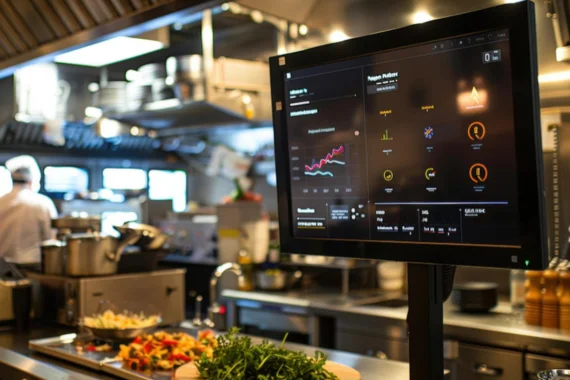
Analytics and Reporting Dashboard
Your waitlist data is only valuable if you can access and act on it. A strong analytics dashboard surfaces the metrics that matter — average wait times by day and service period, walkaway rates, peak arrival windows, and seating efficiency — in a format that’s clear and actionable. Restaurants using waitlist software for restaurants with robust reporting consistently make better staffing, layout, and reservation decisions than those flying blind on historical intuition.
Real-World Use Cases: Restaurants Winning with Digital Waitlists
High-Traffic Restaurants Managing Peak Hours
Consider a high-volume casual dining concept in a busy urban US market — a Saturday dinner service with a consistent 45-minute wait and a lobby that physically can’t hold every waiting party. Before implementing a digital waitlist system, walkaways were a known but unquantified problem. Hosts were fielding constant interruptions, and the floor team had no reliable way to know when the next party would be ready to sit.
With a digital waitlist in place, guests join the queue remotely from the parking lot or a nearby bar. The host manages the entire queue from a single tablet with full real-time visibility. SMS alerts go out automatically when tables clear. The lobby empties out, host interruptions drop significantly, and the walkaway rate falls because guests who are informed stay engaged. The result is more covers per service, higher revenue, and a measurably better guest experience at the busiest point of the week.
Small Cafes Improving Customer Experience
Digital waitlist systems aren’t exclusively for high-volume full-service restaurants. A neighborhood café managing weekend brunch demand faces the same core problem at a smaller scale — more guests than seats, no reliable way to communicate wait times, and guests who walk away and head to the place down the street instead. An automated waitlist system gives that café the same operational advantage as a larger operation: informed guests, reduced walkaways, and front-of-house visibility without requiring additional staff. For a small operation where every cover counts, that’s a meaningful competitive edge.
Common Challenges and How to Overcome Them
Staff Training and Adoption
The most common implementation challenge with any new restaurant technology is staff adoption. A waitlist platform that your host team doesn’t use consistently defeats its own purpose. The solution is selecting a system with an intuitive interface that requires minimal training, investing in a structured onboarding process with your provider, and involving your front-of-house team in the selection process so they understand the operational problem it’s solving from day one.
Initial Setup and Integration Issues
Integrating a new digital waitlist system with an existing POS and floor management setup requires careful configuration. The best waitlist software providers offer dedicated onboarding support and clear technical documentation to minimize this friction. Before selecting a platform, confirm the integration requirements with your current technology stack and verify that the provider has a track record of successful deployments with similar restaurant setups.
Managing Customer Expectations
Guests who are new to a digital waitlist system occasionally need a brief orientation at the host stand. Clear signage explaining how to join, what to expect from SMS updates, and how the system works reduces confusion and improves adoption. Consistent communication from your team — both in explaining the system and in setting accurate wait time expectations — ensures the technology enhances rather than complicates the arrival experience.
How to Choose the Right Digital Waitlist Software for Your Restaurant
Key Factors to Consider
Start with the operational problems you need to solve. High walkaway rates, host stand chaos during peak hours, and lack of queue visibility are the most common drivers of a digital waitlist investment. Match the platform’s core capabilities — SMS notifications, real-time updates, POS integration, and analytics — to those specific needs before evaluating secondary features.
Budget and Scalability
Waitlist software for restaurants varies significantly in pricing model and structure. Evaluate the total cost of the platform — including setup fees, monthly subscription, and any per-message SMS costs — against the revenue impact of even a modest reduction in walkaways and improvement in table turnover. For multi-location operators, confirm that the platform supports centralized management and consistent reporting across all sites without requiring separate configurations for each location.
Ease of Use and Support
A system your team finds difficult to use will be used inconsistently — and inconsistent use produces inconsistent results. Prioritize platforms with intuitive interfaces that minimize training time, and verify the quality of ongoing customer support before committing. The best restaurant technology providers offer dedicated onboarding, responsive support channels, and regular platform updates that keep the system current with evolving operational needs.
Conclusion: Why Digital Waitlists Are a Must-Have in 2026
The operational case for a digital waitlist for restaurants in 2026 is straightforward. Manual queue management generates walkaways, creates host stand chaos, produces no usable data, and delivers a guest experience that falls well short of where US dining expectations now sit. Digital systems solve all of these problems simultaneously — reducing wait times, improving table turnover, capturing guest data, and automating the communication that keeps guests engaged from the moment they join the queue to the moment they’re seated.
For US restaurant operators looking to compete on guest experience, operational efficiency, and data-driven decision-making, a restaurant queue management system is no longer an optional upgrade. It is a baseline requirement for running a modern, profitable restaurant in 2026.
Milagro’s SmartWAIT delivers all of these capabilities in a single platform — fully integrated with SmartPOS, built for every concept from single-location cafes to multi-unit operations, and designed to turn every waitlist interaction into a guest relationship that drives long-term revenue.
Explore SmartWAIT | Book a Demo | See How Milagro Manages Restaurant Queues
Frequently Asked Questions
What is a digital waitlist for restaurants?
A digital waitlist for restaurants is a cloud-based platform that replaces paper-based queue management with an automated system for tracking guest arrivals, managing wait times, and communicating table readiness via SMS. Guests can join remotely, receive real-time updates on their position, and be alerted the moment their table is ready — without standing at the host stand.
How does a restaurant waitlist system work?
When a guest arrives or joins the waitlist remotely, their details are entered into the system. The platform then manages all communication automatically — sending SMS confirmation, periodic queue position updates, and a table-ready notification. The host team manages the entire queue from a single interface with real-time visibility into the floor and every waiting party.
Can digital waitlists reduce customer wait times?
Yes, in two important ways. First, by enabling remote queue joining, guests arrive closer to their actual seating time rather than waiting physically on-site. Second, by improving floor coordination and table turnover visibility, the time between a table clearing and the next party being seated is reduced — meaning the overall operational rhythm of the restaurant runs faster and more efficiently.
Is waitlist software suitable for small restaurants?
Absolutely. Digital waitlist systems are scalable by design and deliver meaningful operational and revenue benefits at any volume level. For a small café or neighborhood restaurant where every cover counts, reducing walkaways and improving the guest arrival experience has a proportionally significant impact on daily revenue and long-term loyalty.
Give every guest real-time visibility into their order — with Milagro.