
Picture two loyalty moments happening at the same time, a few miles apart.
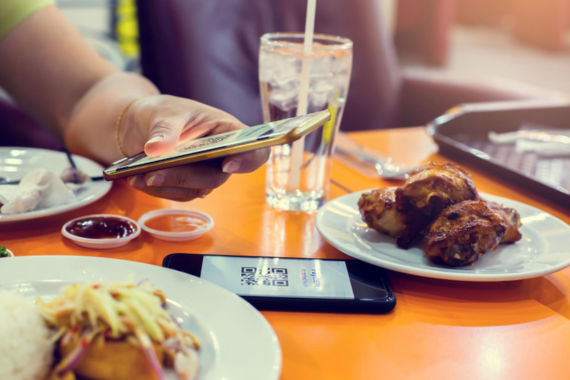
At a McDonald’s drive-through, a customer holds their phone up to the payment terminal. Their app scans, 150 points land in their account, and a notification fires: “You’re 50 points away from a free McFlurry.” The whole exchange takes four seconds. They don’t think twice about it. That’s exactly the point.
Three miles away, a couple walks into a fine dining restaurant for their fifth visit. Before they even reach the host stand, the manager steps forward: “Welcome back. We’ve saved your usual corner table. And congratulations on the anniversary — we have something special planned for dessert.” Nobody scanned anything. No points were awarded. But that couple will be back in a month, and they’ll bring friends.
Both of these are loyalty programs. Neither would work in the other’s context.
Loyalty transactions grew 28.5% year-over-year in 2025, based on data from more than 30,000 restaurants and $26 billion in loyalty sales. Loyalty is no longer a nice-to-have feature — it’s operational infrastructure. But the single biggest mistake restaurant operators make is copying a loyalty strategy that was built for a different type of restaurant.
This guide breaks down exactly how loyalty programs should be structured for quick-service, fast casual, and fine dining restaurants — what works, what backfires, and what technology you need to make it run.
48%
of diners enrolled in loyalty programs in 2025, up from 46% a year prior (PYMNTS, 2026)
73%
of customers would recommend a restaurant with an effective loyalty program
18–30%
average increase in visits and spending with a well-run loyalty program
Why Your Loyalty Program Needs to Match Your Concept
Before you build a single reward structure or download a loyalty app, you need to answer one question: what is the actual relationship between your guests and your restaurant?
That relationship — how often they visit, how much they spend, what they’re emotionally buying when they walk through your door — determines everything about the loyalty program you should build.
Visit Frequency: The Most Fundamental Variable
A QSR guest might stop in 10 to 15 times a month — they need to feel rewarded often or the program feels pointless. A fine dining guest might visit two to four times per year — they need to feel recognized, not rewarded with coupons they’ll never use.
Average Check Size: What a Meaningful Reward Looks Like
At an $11 average check, a free item on your tenth visit feels generous. At a $150 tasting menu, a free appetizer voucher feels like an insult. The reward must be proportional to the spend and the expectation.
Emotional Investment: The Variable Most Operators Miss
QSR guests are buying convenience and value. Fast casual guests are buying quality and identity. Fine dining guests are buying an experience and social currency — they want to feel like insiders, not members of a mass-market program.
Get the match wrong and you don’t just have an ineffective loyalty program. You actively signal to your guests that you don’t understand your own restaurant.
QSR Loyalty Programs: Fast, Frictionless, and Fueled by Data
Quick-service loyalty is a volume game. The math is simple: guests visit frequently, individual transactions are small, and the program needs to generate a constant feel of progress toward a meaningful reward — without adding a single second of friction to a visit that guests expect to take under five minutes.
41.6%
of QSR customers actively enrolled in a loyalty program (growing steadily since)
42%
of total QSR sales now come from digital channels — up from 15% in 2019
What Actually Works for QSR Loyalty
- Points-per-dollar is the right foundation. A simple earn rate — 10 points per dollar, redeemable for free menu items — is frictionless, familiar, and scalable across millions of transactions.
- Your loyalty program must live inside an app. The most successful QSR loyalty apps double as ordering tools. Guests who order through the app spend more, visit more often, and generate data that anonymous transactions never will. Chipotle Rewards is the benchmark: badges, challenges, app-exclusive items, and daily engagement.
- Enrollment needs to happen at the point of sale. If a guest walks out without joining, you’ve lost a data point you can never recover. SmartPOS lets guests enroll at checkout with their phone number — no separate app download required in the moment.
- Gift cards are an underused loyalty entry point. Selling a gift card at the POS creates a natural moment to enroll that guest. It converts a one-time buyer — or a gift recipient — into a returning member with account history.
- Personalized push notifications turn data into revenue. “Your usual Spicy Deluxe Chicken — here’s 20% off before noon today” converts. Generic “Come back and earn points!” blasts do not.
What Doesn’t Work for QSR Loyalty
- Tiered systems with high earn thresholds — guests need to see value within a few visits, not after 42.
- High-friction enrollment — any setup that requires a form or app download mid-visit will be ignored. The enrollment window at QSR is roughly 15 seconds.
- Rewards that feel too distant — if the math says it takes 3 months to earn a free item, the program is invisible.
McDonald’s Rewards now has over 60 million active members. The key is app-based simplicity and immediate perceived value — free fries on day one.
Fast Casual Loyalty Programs: Balancing Convenience with Connection
Fast casual occupies a genuinely interesting loyalty middle ground. Guests visit two to four times per month — more often than fine dining, but they’re not seeking the pure transactional speed of QSR. They chose your restaurant because of what it stands for: the quality of ingredients, the specific cuisine, the values behind the brand. Your loyalty program needs to reward frequency while also reinforcing that identity.
6–10×
more often — Panera’s loyalty members visit the brand vs non-members
62%
of customers say a brand would lose their loyalty without personalized experiences (NRN, 2024)
What Actually Works for Fast Casual Loyalty
- Tiered programs earn deeper engagement over time. A Bronze → Silver → Gold structure rewards guests as their relationship deepens. Bronze gets birthday discounts. Gold gets early access to new menu items, chef tastings, and waitlist priority.
- Subscription models create visit habit. Fast casual brands can offer a monthly subscription for a coffee, fountain drink, or signature side item — like Panera’s Unlimited Sip Club. When a guest pays $9/month for unlimited beverages, your restaurant becomes a daily default.
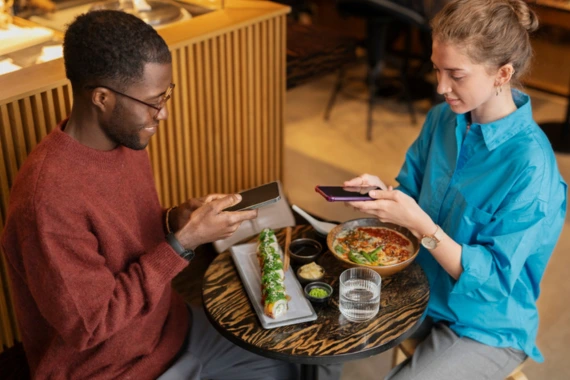
- Tableside enrollment removes friction without removing experience. With digital menus, guests can browse, order, and enroll in the loyalty program from their phone at the table — in the context of a good meal, which is exactly when guests are most likely to say yes.
- Priority waitlist placement is a high-value, low-cost perk. Rewarding Gold members with first-in-line status on a busy Friday night costs nothing operationally but communicates genuine VIP treatment.
- Personalized offers must be behavioral, not just calendar-based. A birthday offer is table stakes. An offer triggered because a guest’s visit frequency has dropped from weekly to monthly — that wins them back.
What Doesn’t Work for Fast Casual Loyalty
- Discount-only programs train guests to visit only when there’s a deal, building a price-sensitive audience that churns at the first competitive offer.
- Disconnected loyalty data — if dine-in points don’t accumulate on online orders, or third-party delivery visits don’t feed the same guest profile, you’re personalizing based on a fraction of actual behavior.
💡 Milagro’s Guest Data Platform captures every transaction — dine-in, online, and third-party delivery — into a unified guest profile. Fast casual operators can trigger personalized campaigns based on real behavior across every channel, not just in-store visits.
Fine Dining Loyalty Programs: Exclusivity Over Discounts
Fine dining loyalty is not a program. It’s a posture.
The entire concept of a points card or a redemption threshold is misaligned with what brings a guest back to a fine dining restaurant. They are not returning because they have 400 points toward a free glass of wine. They are returning because the chef sent out an extra course when the kitchen knew it was their wedding anniversary. They are returning because their preferred table was waiting.
Recognition is the reward. Belonging is the currency.
$12.9B
current value of the loyalty management market (projected $20.36B by 2030)
89%
of restaurants satisfied with their loyalty programs — above the 83% global average (Antavo, 2026)
What Actually Works for Fine Dining Loyalty
- A well-maintained guest CRM replaces the formal loyalty program entirely. The French Laundry does not have a punch card. What it has is a meticulous guest record: dietary restrictions, celebration dates, preferred wines, preferred seats. Every visit adds to that record. SmartPOS logs guest preferences and visit history across every table — giving front-of-house staff the context they need before a guest sits down.
- Invitation-only experiences are the highest-value loyalty reward in fine dining. A pre-opening tasting of the new seasonal menu. A private wine dinner with the chef. An exclusive pop-up table. These events cost relatively little to run but communicate something priceless: you are not a member of our points program — you are a member of our inner circle.
- Priority reservations are disproportionately valuable. For restaurants with difficult-to-book tables, first access to Friday and Saturday slots is a retention tool that costs nothing. A guest who can always get a table stops looking at competitors.
- The restaurant should do the work, not the guest. Fine dining loyalty should be entirely passive from the guest’s perspective. They should never be asked to scan, download, or fill in a form. The restaurant captures data through every transaction, every reservation note, every server observation.
What Doesn’t Work for Fine Dining Loyalty
- Points programs with free item redemptions directly undermine brand equity. When a guest who just spent $280 on dinner receives a notification they’ve earned a free dessert, the implicit message is that your restaurant is the kind of place where you accumulate tokens for treats.
- Generic email blasts with coupon codes are the antithesis of the personalized, exclusive experience fine dining depends on. Every communication should feel written specifically for that guest — because with the right data infrastructure, it can be.
- Requiring self-enrollment via QR code — the restaurant should always do the work.
QSR vs Fast Casual vs Fine Dining: The Full Comparison
Here is how the three models stack up across every critical variable:
| Factor | QSR | Fast Casual | Fine Dining |
|---|---|---|---|
| Visit frequency | 10–15×/month | 2–4×/month | 2–4×/year |
| Average check | $8–$15 | $12–$25 | $75–$200+ |
| Loyalty model | Points/app | Tiered/subscription | CRM/VIP access |
| Key reward | Free item | Experience + discount | Recognition + exclusivity |
| Enrollment | At POS / app | Tableside / digital | Staff-led / passive |
| Tech requirement | Mobile app + POS | POS + CDP + ordering | POS + guest CRM |
| Biggest risk | Low perceived value | Discount dependency | Feeling transactional |
| Real-world model | McDonald’s Rewards (60M+ members) | Chipotle/Panera Sip Club | Guest database (French Laundry model) |
The key insight from this table is that loyalty program complexity should increase as visit frequency decreases. QSR programs must be simple because guests interact with them 10 to 15 times per month. Fine dining programs can be deeply personalized because each interaction is rare, high-value, and emotionally significant. Fast casual sits in the middle: structured enough to reward frequency, personal enough to reflect brand identity.
How Your POS Either Powers or Breaks Your Loyalty Program
The best loyalty strategy in the world fails if the technology underneath it can’t capture, connect, and act on guest data. This is where most independent and mid-size restaurant operators lose ground to the big chains — not because they lack creativity, but because their POS is disconnected from their loyalty program, online ordering platform, and guest database.
Three Disconnection Failure Modes
- If your loyalty program doesn’t connect to your POS, you cannot attribute revenue to loyalty members — meaning you cannot prove ROI or identify your highest-value guests.
- If your online ordering platform is separate, loyalty data is fragmented: a guest who visits three times in person and orders twice online shows up as five separate people in your data, and none of them ever earns enough to redeem.
- If your POS doesn’t feed into a Guest Data Platform, personalization is impossible beyond basic birthday emails.
$15.08
per visit — loyalty members vs $14.82 for anonymous guests (PAR Technology, 2026, 30K+ restaurants)
28.5%
YoY growth in loyalty transactions in 2025 — while anonymous transactions fell 6.7% (PAR Technology)
SmartPOS is built to be the connective tissue between all of these systems — tying loyalty, online ordering, gift cards, guest data, and marketing automation into a single unified platform. Whether you’re running a QSR concept with 8 locations or a single fine dining room, every transaction feeds the same guest profile, every channel contributes to the same loyalty record, and every personalized campaign is triggered by real behavior.
The Right Loyalty Program Starts with the Right Foundation
Loyalty is not a feature you bolt onto a restaurant. It’s a system you build underneath it — one that reflects how your guests actually behave, what they emotionally value about your concept, and how often they give you the opportunity to earn their return visit.
- QSR operators need speed, scale, and a frictionless app experience that rewards frequency without slowing down a three-minute transaction.
- Fast casual operators need a tiered, experience-rich program that reinforces brand identity and captures cross-channel behavior in a unified guest profile.
- Fine dining operators need a data infrastructure so rich that their team can make every guest feel remembered — without that guest ever having to formally “join” anything.
See how Milagro SmartPOS powers loyalty across every restaurant concept